
Your members’ expectations are being shaped by every digital experience they have.
When they can sign other contracts online, track orders in real time, and access all the information they need from their phone, they begin to expect the same level of care from every organisation they interact with.
This is more challenging for building societies, with stricter regulatory requirements. As a result, many societies are still relying on paper, emails and disconnected portals.
In our latest 2026 Building Society report, we surveyed both building society leaders and members to understand their expectations around communication and document management.
In this article, we explore five key trends from the research and dive into what they mean for the future of member engagement.
Key trends
- Members are ready to go digital
- Communication channels are spread too thin
- Building societies are still relying on paper documents
- Tracking communications remains a challenge
- Members of all ages are ready for online platforms
1. Members are ready to go digital
Building societies have been historically progressive when it comes to digital innovation. Back in 1983, the Nottingham Building Society first introduced Homelink, which allowed members to pay bills from their phone or TV connection.
While most building societies today integrate technology into every part of their experience, only 18% report that members can complete most key actions fully online.
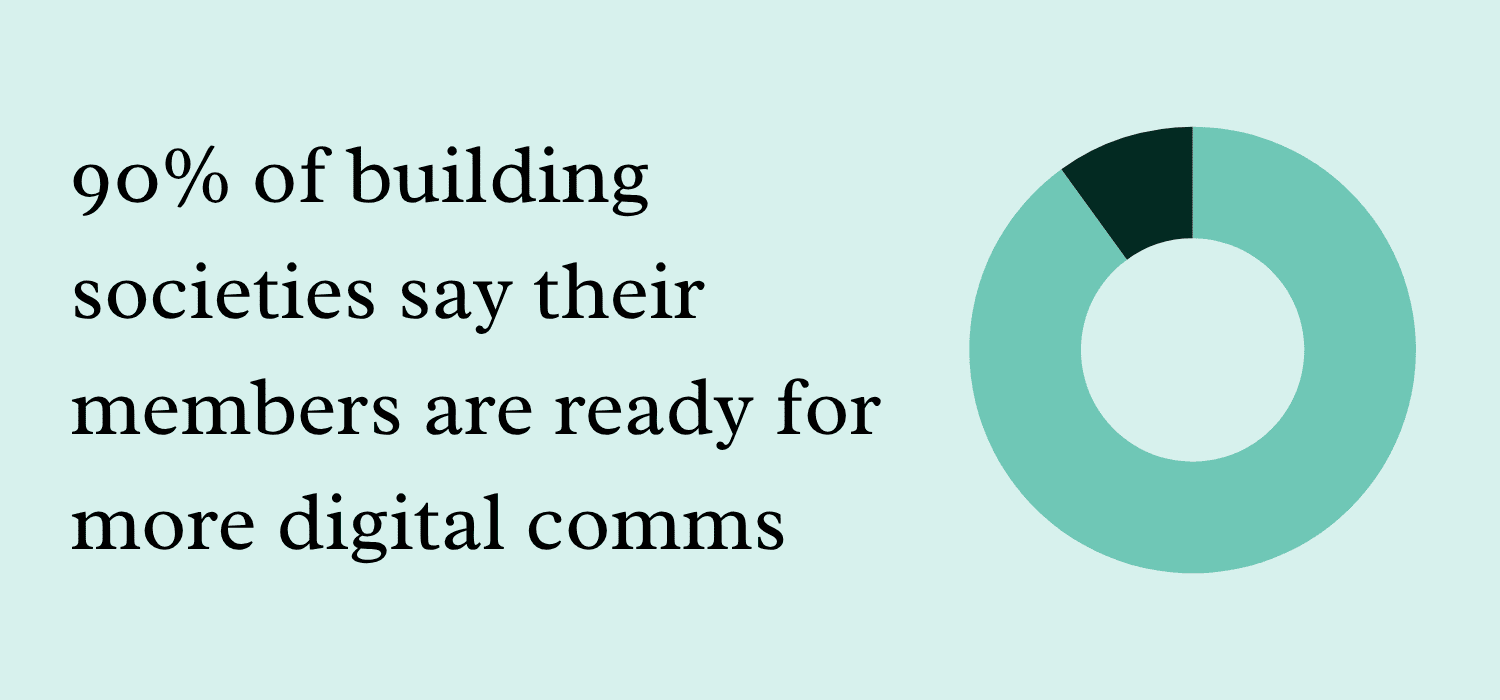
This is surprising as we also found that 90% of building societies believe their members are ready for increased digital communication.
Members are also ready, with 72% already using digital platforms to manage their accounts.
In addition, the Building Society Association found that mobile-ready platforms are the top technology investment priority for most organisations in the next 5 years.
All of this suggests that building society members are more than ready to manage their finances digitally. Over the next few years, the challenge will be creating experiences that customers actually enjoy using.
2. Communication channels are spread too thin
As the number of channels we use has ballooned, so too has the complexity of managing member interactions.
It’s not unheard of for a member to apply for a mortgage with documents by post, send supporting information by email, discuss their application over the phone, and track progress through an online portal.
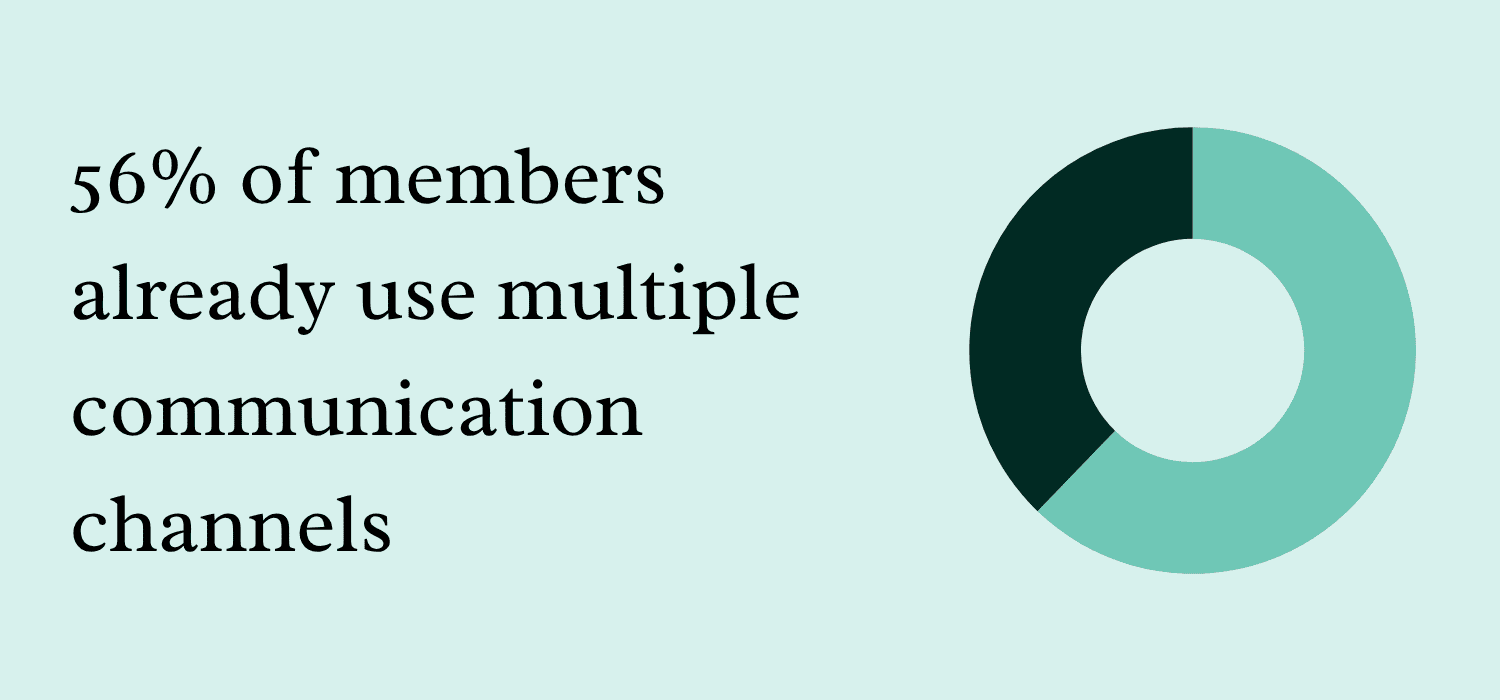
Our research found that 56% of members already use multiple communication channels when interacting with their building society.
At the same time, 75% said it is important to have all communications accessible in one place.
The problem is that while this might work in theory, it often leads to teams spending hours each week looking for documents and creates missed opportunities when potential members drop out of the process without anyone noticing.
These frustrations alone can outweigh the cost of consolidating the way you communicate with members.
3. Building societies are still relying on paper documents
Despite adopting modern approaches, many building societies can’t shake the need to use paper.
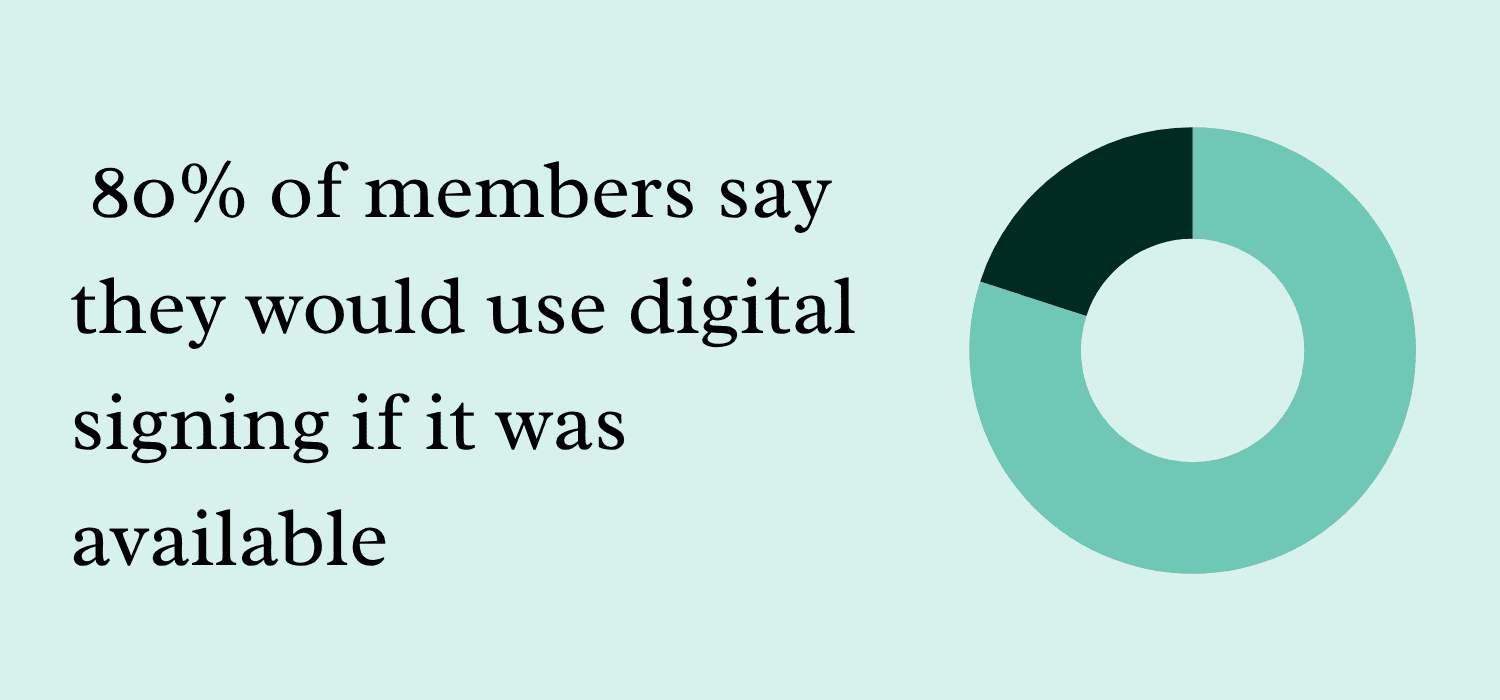
However, now with secure digital alternatives, 80% of members say they would use digital signing if it were available.
This is also reflected in data from the Royal Mail, which reports that letter volumes have fallen from around 20 billion a year in 2004 to 2005 to around 6.7 billion in 2023.
There is also a strong argument here for sustainability. A typical letter sent through the post generates around 20 grams of CO₂e (the same as sending 100 short emails). This is not considering paper, printing and storage.
Beyond sustainability, the UK government estimates that reducing paper-based processes could generate £1.14 billion for UK businesses over 10 years.
4. Tracking communications remains a challenge
When conversations between the building society and its members are scattered across channels, we completely lose visibility.
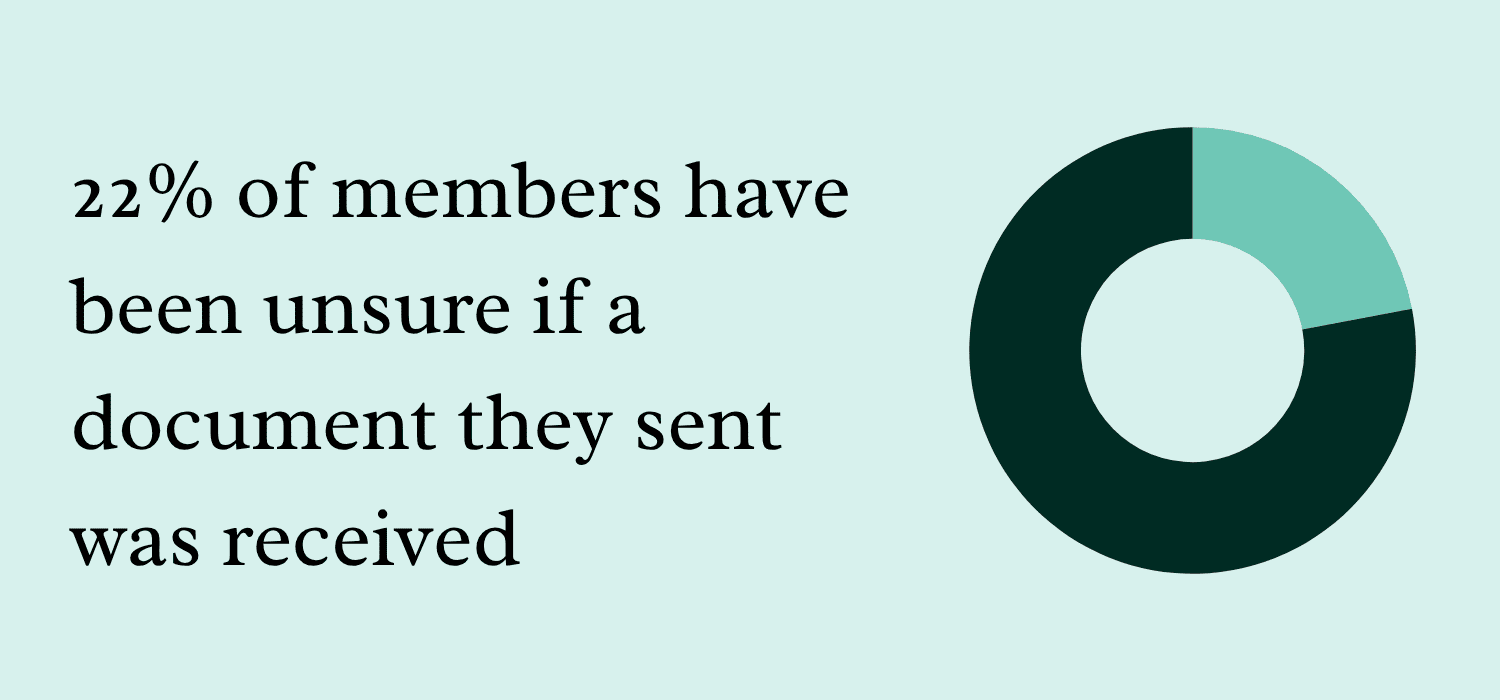
Our research found that 22% of members have been unsure whether their building society received a document they sent.
At the same time, 91% of building societies say their communication systems are not fully integrated with core member platforms, while 73% rely on three or more systems to manage communications.
These Frankenstein-style software stacks often begin as a handful of useful tools, but over time, they can create problems.
Members send proof of identity or other important documents, yet there is often no easy way to confirm they have been received. Internally, teams find themselves jumping between systems to piece together a complete picture of a single member interaction. The result is more risk and less confidence on both sides.
The path to clarity is tools that integrate or can be embedded into your existing client portal.
5. Members of all ages are ready for online platforms
It’s a common misconception that only younger generations prefer digital communications.
While this may have been more true 20 years ago, now almost everyone is using digital tools for their life admin, particularly finances. In 2025, Lloyds reported that 95% of UK internet users are using digital banking.
Our research supports this trend. Here’s what we found:
Digital platform usage
- 100% of members aged 18-29
- 70% of members aged 45-60
- 50% of members aged over 60
Willingness to sign documents digitally
- 84% of members aged 30-44
- 79% of members aged 45-60
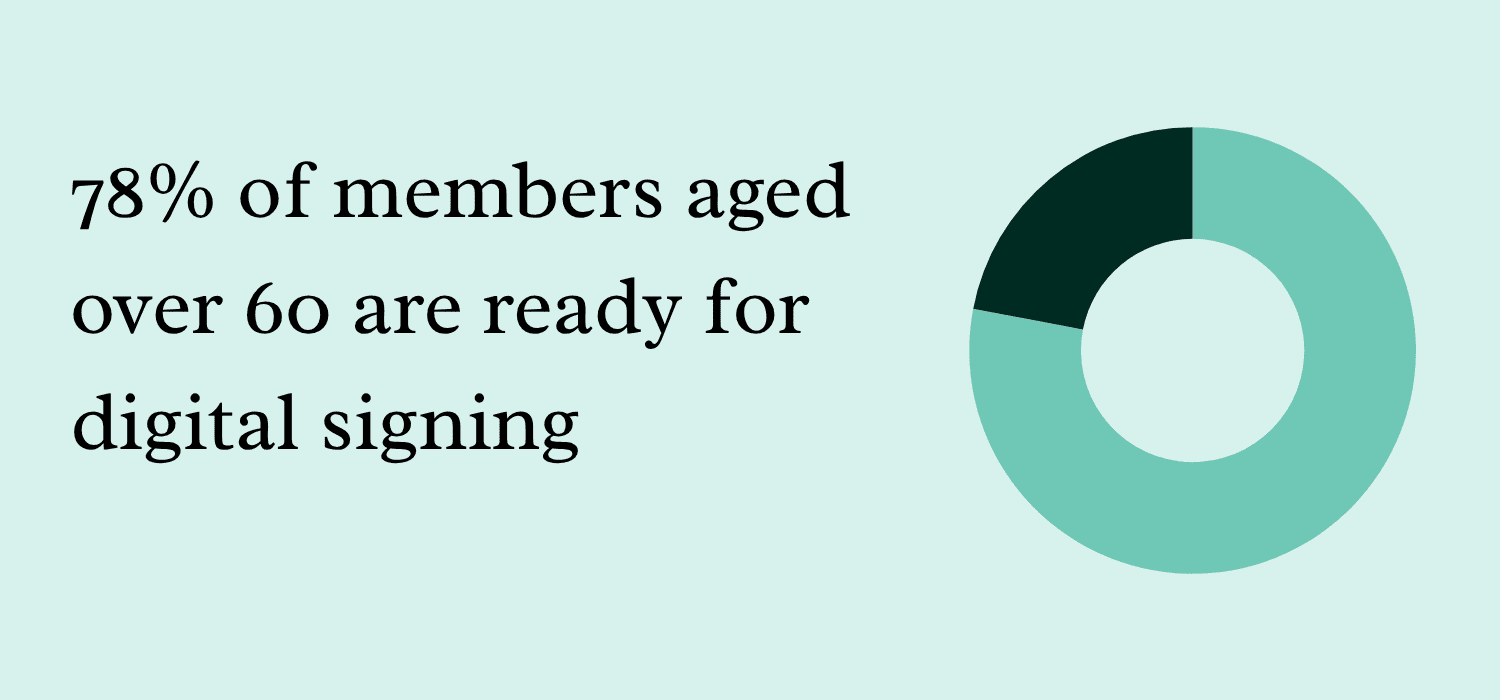
- 78% of members aged over 60
With a large portion of the population ready and wanting digital tools to manage their finances and sign documents, now is the time to start planning for a digital-first member experience.
How Legado can support your building society
Legado offers software made specifically for building societies. There are three core products:
- CommsHub: A single place to communicate with members and track engagement.
- Digital Vault: A secure platform for sharing and storing important documents.
- LegadoSign: An enterprise-grade eSignature solution designed for regulated industries.
Legado is designed specifically for regulated industries and can be deployed as a standalone solution or integrated with your existing technology stack.
Every product can also be fully white-labelled to match your brand and desired member experience.
In addition, our team manages the implementation process from start to finish, helping reduce the burden on your internal team.
To explore how Legado could support your building society, book a no-obligation demo.
In summary
The biggest takeaway from this year’s research is that members are already managing their finances digitally, using multiple communication channels, and are willing to sign documents online.
Building societies now need to ensure they are keeping up with these expectations.
For a deeper look at the data, download the full 2026 Building Society Insight Report.
Alternatively, if you’re exploring ways to modernise your communication and document management, book a demo with the Legado team.
FAQs
Who is the largest building society in the UK?
The Nationwide Building Society is the largest building society in the UK. It currently serves more than 16 million members.
How many people use online banking?
Online banking is now the norm for most UK consumers. According to Lloyds’ 2025 Consumer Digital Index, 95% of UK internet users use digital banking services to manage their finances.
Do building societies use online banking?
Yes, most building societies now offer online and mobile banking services. However, our research found that only 18% of building societies say members can complete most of their key actions fully online.
What software can building societies use to send messages to members?
Legado’s CommsHub and Digital Vault are designed for building societies. They allow teams to send messages, share documents, and track member engagement from a single place. The software can either be embedded within an existing portal or offered as a standalone platform.
Is there a secure platform for financial e-signatures?
Yes, LegadoSign is an enterprise-grade e-signature platform built for regulated industries. It helps building societies collect signatures securely while maintaining a full audit trail.