
A mammoth amount of effort goes into winning new customers in financial services. People are careful with their financial well-being, so they tend to be discerning buyers from the outset. Once they choose you, retention becomes the priority. With 70% of financial institutions worldwide losing clients in the past year due to slow onboarding, the last thing you want is for their first experience to feel confusing and disjointed.
In fact, 73% of businesses are more likely to select a bank with a fully digital onboarding process, yet 57% are still with a provider that requires some paper-based documentation.
This made sense 20 years ago, but now with secure, digital options available for regulated industries, now is a better time than ever to start planning your digital transformation. The customer onboarding journey is a great place to start.
In this article, we will cover the practical steps you can follow to make your onboarding faster, clearer, and more secure.
1. Map the onboarding customer journey from the customer’s perspective
While you might have your own opinion on the onboarding experience, it’s important to fully understand how your customers experience it before you can make meaningful change. Even if this means sending mail in the post just to test the wait times.
Currently, customer abandonment during onboarding sits at an average of 18%, representing people who showed genuine interest but walked away purely because of process friction.
What you’re looking for in this process is moments where you feel unclear about what to do next, long waiting periods or clunky online systems. For example, 82% of building societies still report sending more than a quarter of communications by post.

Remember to consider:
-
- First touchpoints
- Identity or eligibility checks
- Document requests
- Approvals and signatures
- Welcome and next-step communications
As you go through each stage, write down exactly what you did, what the experience was like, how many channels you needed to switch between, how long the wait times were, and anything else that stood out.
Then it can be helpful to turn this into a swimlane chart. All of this work will give you a clear understanding of where you stand and allow you to make targeted improvements.
2. Speak directly with your customers
Before you decide on any changes, we would always encourage you to run some customer interviews to hear directly from a range of people who engage with your business.
Try to pick a diverse group of customers to speak directly to, and if possible, organise a recorded video call. This works better than an online survey as it gives you the option to ask follow-up questions and gather more context.
During this interview, you could ask questions such as:
-
- Can you walk me through your experience onboarding with us?
- Was there a moment early on where you felt unsure what to do next?
- Did any steps take longer than you expected?
- Did you feel you understood the fees, terms, or risks before you finished onboarding?
- Did you contact our team for support during onboarding? What for, and how did that go?
- Did our process live up to your expectations? Why or why not?
3. Reduce friction in document collection and form completion
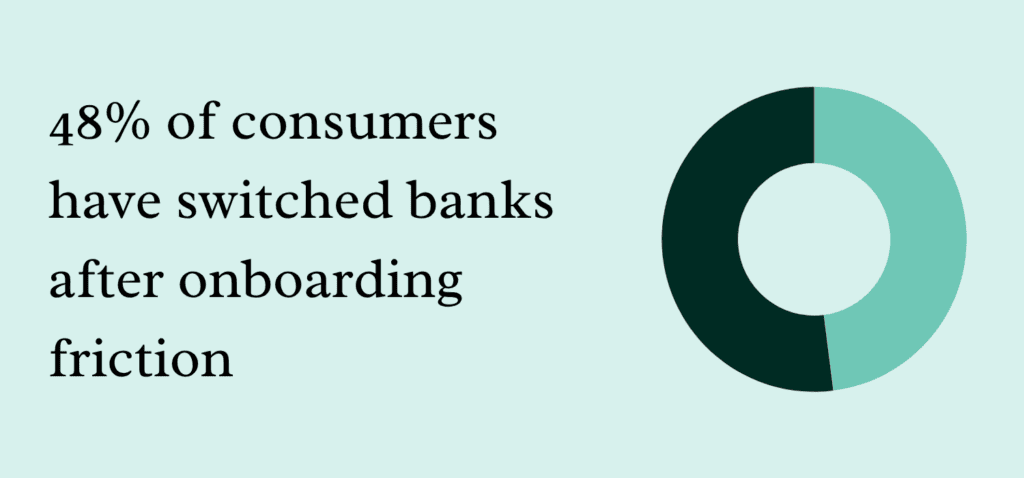
Now that you have mapped out the process and spoken to customers, you can start to look at where the experience can be made easier. This is important as one study found that 48% of consumers who hit friction during digital onboarding opt to take their business to a different bank entirely.
One of the moments that causes the most friction is document collection.
If a customer is asked to print a form, scan evidence, post documents, or send sensitive information by email, every extra step adds another chance for delay or drop-off. This also creates more admin work for internal teams, who need to chase down missing information, manually search for attachments, and move documents to the right place.
When considering your new process, here are some best practices to help guide you:
-
- Use a secure digital upload route for documents.
- Keep instructions clear and mobile-friendly.
- Pre-fill customer details where possible.
- Track what has been returned and what is still missing.
Keep in mind that this process can be made second nature with the right software.
4. Make communications clear and evidenced
How you communicate next steps to customers can save your team time in the long run. There is a risk to communicating across multiple platforms with customers, and a clear benefit to bringing all your messages to one place.
For example, if you have one employee following up with a client who is applying for a mortgage become unwell, their cover will need to spend time combing through what the client has been told and/or received. As you will know, these small moments of inefficiency add up.
On the customer experience side, there is an expectation now that they will have self-serve options. In fact, we found that 75% of building society members say accessing all communications in one place is important to them.
To get started, look for a communication platform that is built specifically for regulated financial services. Consumer Duty needs to be able to evidence that your communications were not just received but understood by your clients. So make sure to choose a platform that gives your team a clear audit trail.
5. Speak to the teams that work directly with customers
Beyond your customers and executives, the not-to-be-forgotten stakeholders are the frontline workers who support customers daily. From a purely process view, it can be near impossible to predict what is slowing your team down. Frontline workers can help you see the unforeseeable.
In addition, when people feel heard, it encourages them to support the change, rather than resist it. Any project manager will tell you that this buy-in can be the difference between an uphill battle and successful digital transformation.
6. Choose a partner who has helped similar organisations
Now that you have mapped out your processes and spoken to customers and internal teams, it’s time to start looking for the right tools to support your goals.
We recommend starting by documenting all your requirements in a spreadsheet. From there, search for platforms built for financial services that offer onboarding workflows, and look for software that has helped businesses similar to yours. For example, regulated, enterprise-level businesses should check their case studies to see if the vendor has dealt with the same scale before and with others in your industry.
Once you’ve gathered your top three vendors, reach out to their sales teams. Sending your requirements documentation to the vendor’s team ahead of the meeting also lets you test two things: whether their product can meet your requirements, and whether they’re proactive and actually read and act on what you’ve given them.
From there, you’ll be able to work with your chosen vendor to support your implementation.
7. Set up internal education prior to go-live
Once you’ve chosen your platform, it’s time to prepare your teams to use it. Your frontline staff will be the stewards for your customers, so they must understand the platform and process inside-out.
This training should start during testing, not on go-live day itself. This gives your staff the chance to get comfortable with the system before it’s live with real customers.
Here are some actions you can take to ensure this is the case:
-
- Run hands-on training sessions: Have staff log in and request a document, review a submission, and send a follow-up message through the platform themselves, rather than watching a demo.
- Give staff a sandbox environment to practise in before go-live: Use test data so staff can get comfortable requesting documents and messaging customers without touching real records.
- Identify a few “champions” in each team: Once live, questions can still pop up on the team floor. Having someone on hand who can answer them immediately helps support a smooth transition.
- Create short, simple reference guides: A one-page guide for troubleshooting common issues, like a customer uploading the wrong document, can be more useful mid-shift than a full manual.
- Set up a clear channel for staff to flag issues once live: A dedicated channel for the first few weeks helps you catch any problems. If you want to tweak settings post go-live, this channel is often where those issues first surface, giving you what you need to raise them with your provider.
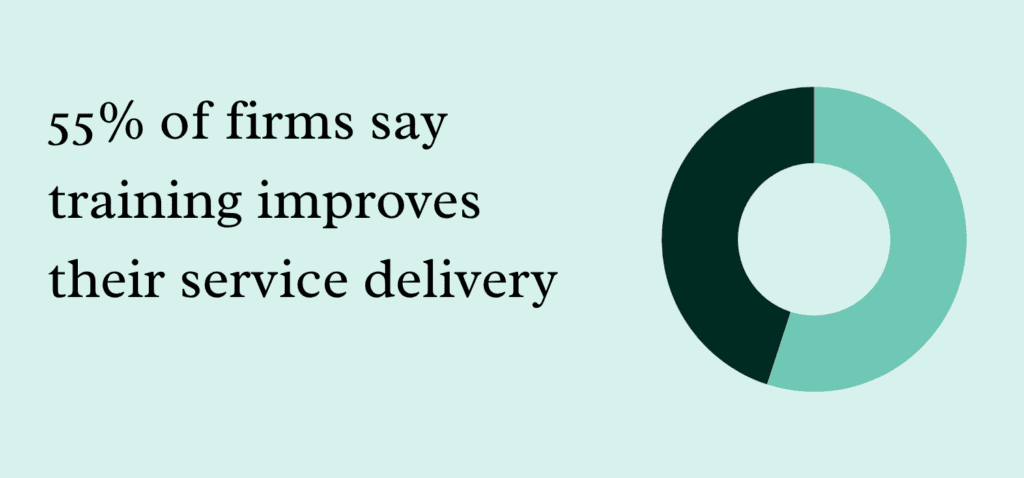
Well-prepared staff means a smoother, more confident experience for your customers. In fact, a 2026 financial services CX report found that 55% of organisations said providing employee training improves service delivery.
8. Measure and improve the journey over time
You’ll want to keep reviewing the impact of your transformation process after go-live. A platform built for regulated financial services should surface this data as standard, through delivery confirmations, read receipts, and activity tracking, so your team isn’t chasing it manually.
Here are the metrics you can track and how.
| Metric | How to track it |
|---|---|
| Completion rate | % of customers who started onboarding and reached full account activation |
| Turnaround time | Average time from first document request to full completion |
| Drop-off points | Stage of the journey where customers stop responding or fail to complete a step |
| Response rates | % of customers who respond to a communication or document request |
| Document return rate | % of requested documents returned first time versus rejected or resubmitted |
In summary
Improving the onboarding journey in financial services comes down to reducing friction, strengthening trust, and building evidence-led workflows that work for both your customers and your internal teams. None of this has to mean a complete overhaul overnight. Start by mapping where the friction actually is, speak to the people living it on both sides, and build from there.
Ready to see what a smoother, evidence-led onboarding journey could look like for your business? Book a discovery call with our team to find out how Legado can help.
FAQs
What is customer onboarding in financial services?
In the financial services industry, customer onboarding refers to when a customer is inducted into their account. Digitally, this can be setting up a login, 2 factor authentication, verifying their identity, signing documents and more.
For example, onboarding for a mortgage takes new clients through the stages of application, including identity and eligibility checks, document collection, underwriting and approval, signing of the offer, and completion, where funds are released and the account is set up.
Why does onboarding matter for financial services firms?
The onboarding process is especially important for financial services because it shapes trust, supports compliance, improves operational efficiency, and directly affects customer experience. First impressions count, with 73% of businesses more likely to select a bank with a fully digital onboarding process.
How can financial services firms improve the onboarding process?
For many financial institutions, their onboarding process still relies on manual, paper-based steps. Eventually, most companies will transition to a digital-first experience as this style meets the majority of customer expectations and saves time and money.
To get this underway, businesses are moving to platforms that support digital document collection, secure communications, automation of manual steps, and better visibility into where customers are getting stuck.
What causes friction in financial services onboarding?
Common culprits include paper-based steps, poor or inconsistent communication, duplicated admin between teams, and slow approvals.
How do you measure onboarding success?
You can track completion rates, turnaround time, customer engagement, and drop-off points to see where the journey works well and where clients slow down or drop off.